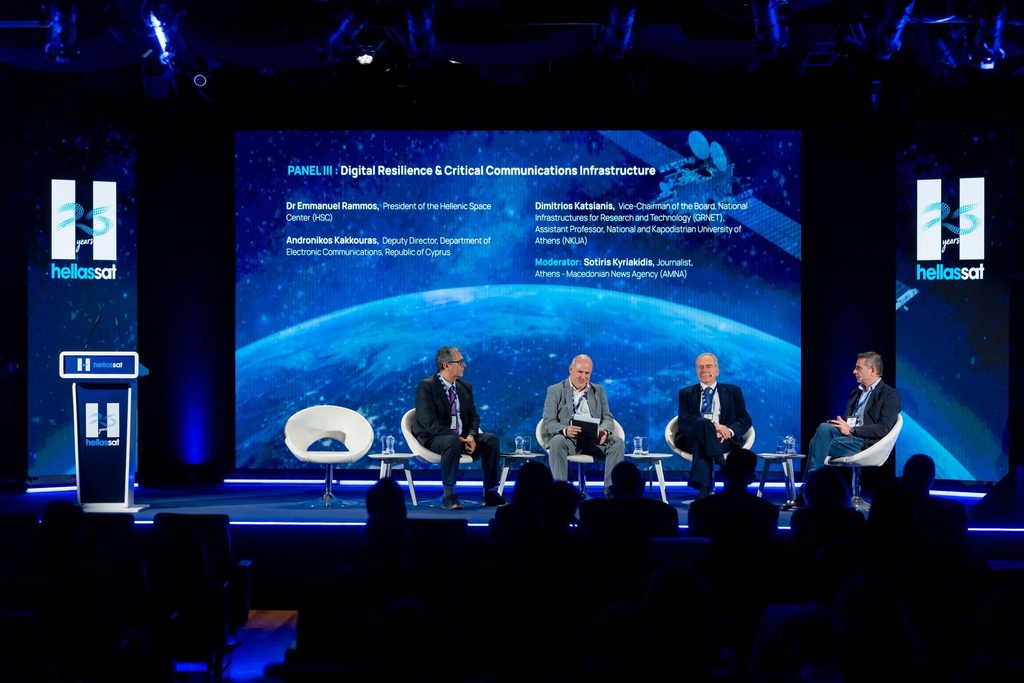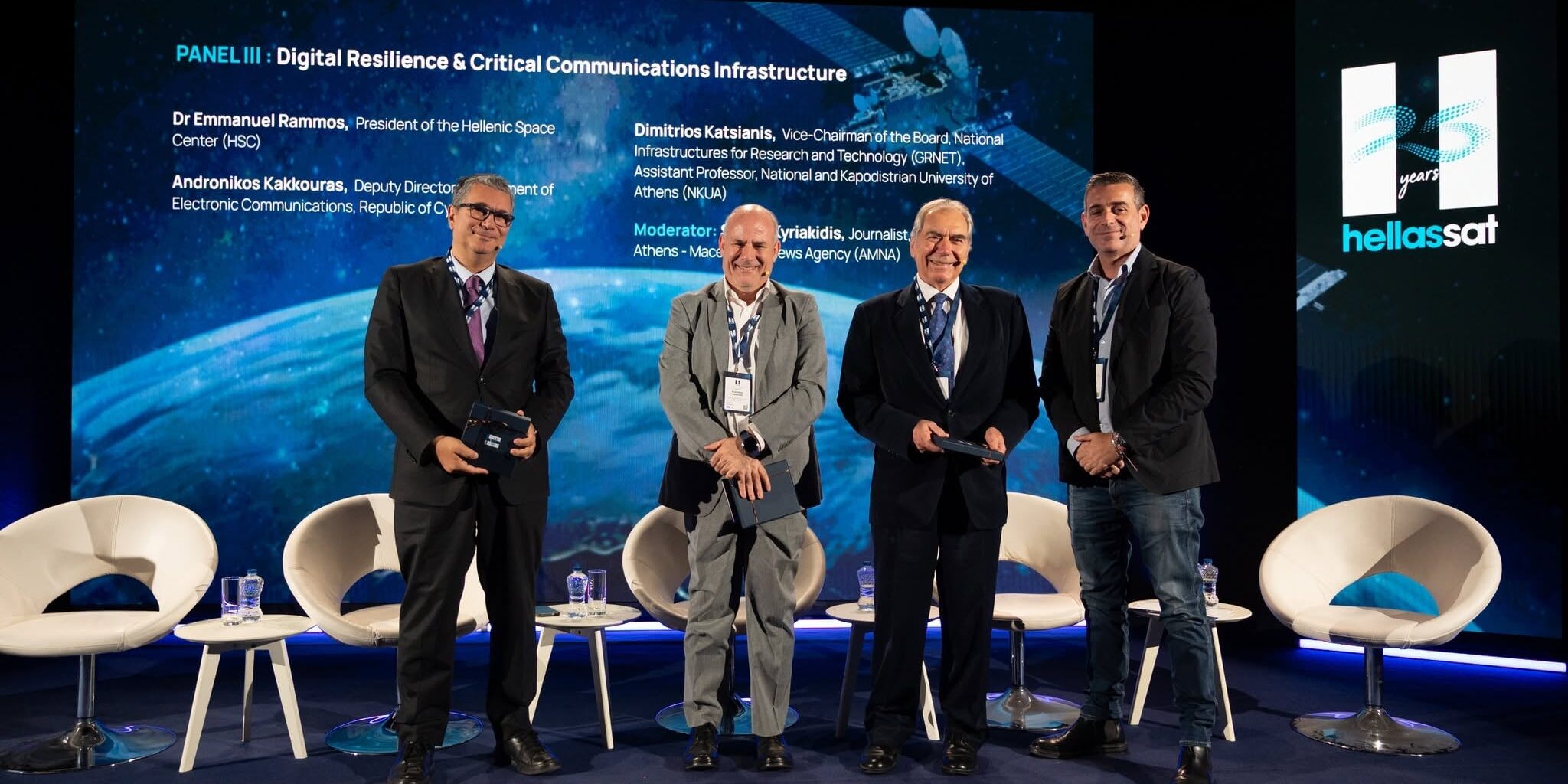
SEEWQCI and HellasQCI, both coordinated by GRNET, were highlighted at the 3rd Symposium for Space 2026, organised by Hellas Sat on 7-8 October 2026 at the Hellenic Cosmos Cultural Centre in Athens, Greece, on the occasion of World Space Week and the company’s 25th anniversary.
The event brought together representatives from government institutions, European organisations, academia, research and industry to discuss developments in the space sector, including the role of advanced communication infrastructures in strengthening security and digital resilience.
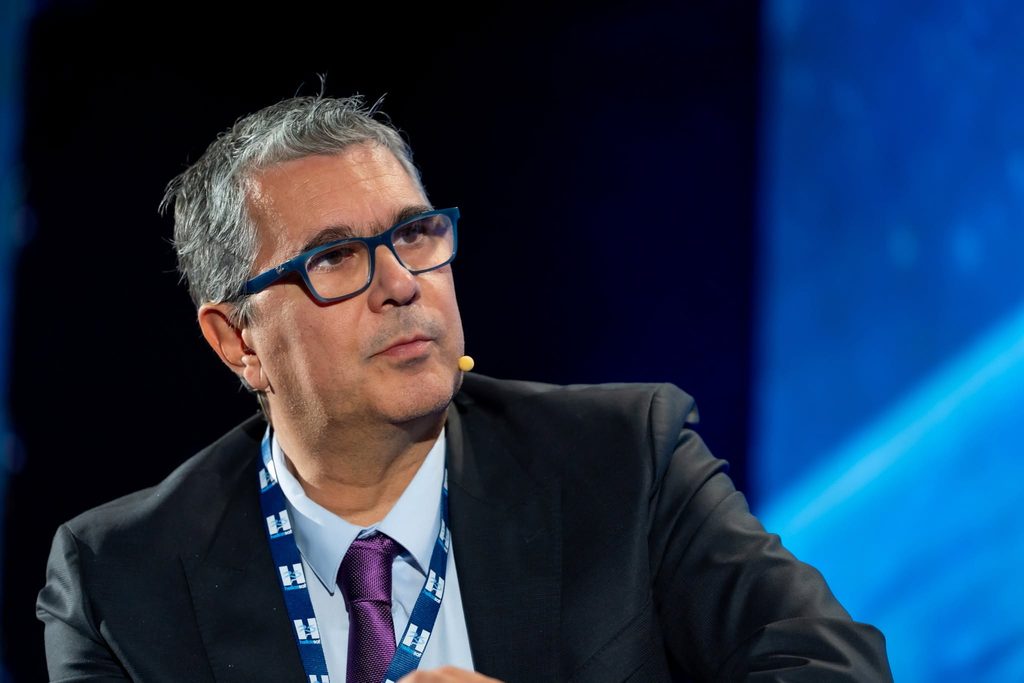
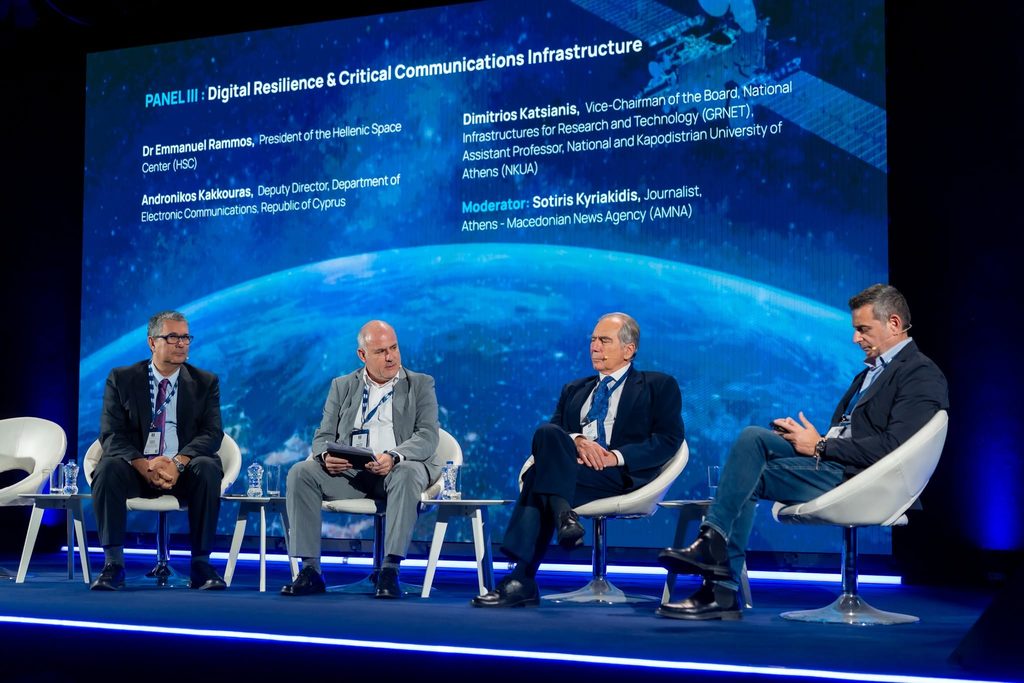
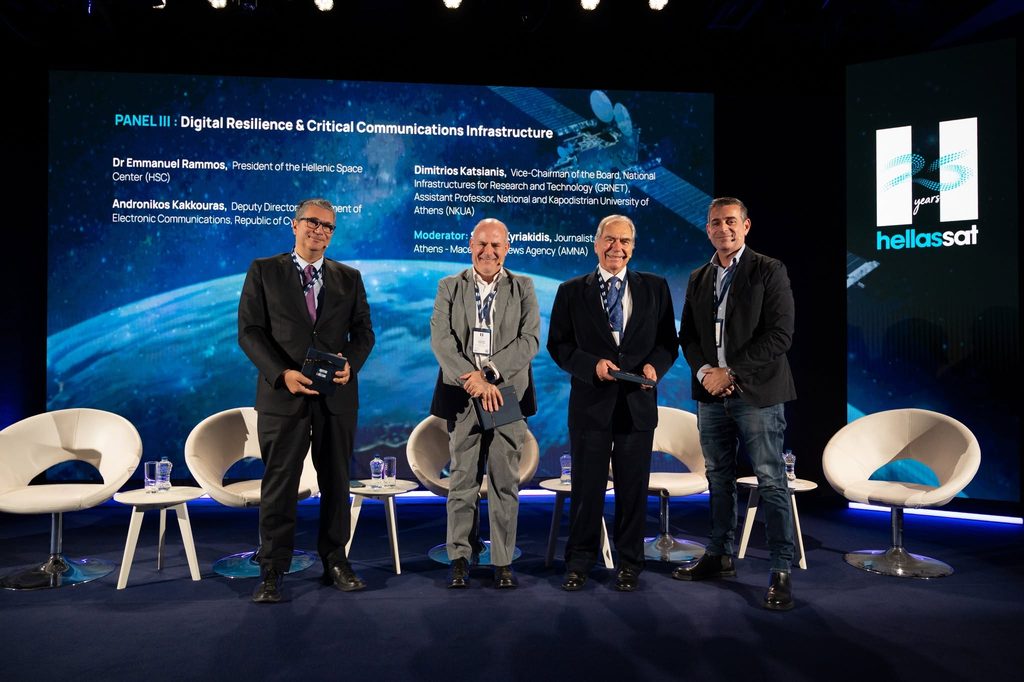
On 8 October, Dimitris Katsianis, Vice Chairman of GRNET and Assistant Professor at the National and Kapodistrian University of Athens (NKUA), participated in the panel discussion “Digital Resilience & Critical Communications Infrastructure”, alongside Dr. Emmanouil Rammos, President of the Hellenic Space Center, and Andronikos Kakkouras, Deputy Director of the Department of Electronic Communications, Deputy Ministry of Research, Innovation and Digital Policy of Cyprus. The discussion was moderated by Sotiris Kyriakidis, journalist at the Athens-Macedonian News Agency (AMNA).
The panel focused on the resilience of critical communications infrastructure, the importance of maintaining connectivity for public services and citizens, and the complementary role of terrestrial and satellite networks in ensuring secure and reliable communications under normal conditions and during crises.
During his intervention, Dimitris Katsianis highlighted GRNET’s role in developing and operating Greece’s national research and education network, comprising approximately 10,000 km of optical fibre infrastructure. He also referred to Greece’s connectivity with the European research and education network GÉANT, enabling the country’s research community to access international infrastructures and services.
He further outlined the upgrade of national network capabilities through the GRNET5 (ΕΔΕΤ5) project, implemented under the Recovery and Resilience Facility, providing high-capacity connections ranging from 100 to 400 Gbps, compared with the previous 10 Gbps.
Particular emphasis was placed on the contribution of HellasQCI and SEEWQCI to strengthening communication security, protecting sensitive data and enhancing the resilience of critical infrastructures within the framework of the European EuroQCI initiative. Through the completed national HellasQCI project, Greece developed a Quantum Key Distribution (QKD) network spanning approximately 700 km, alongside terrestrial connectivity to three observatories at Helmos, Holomondas and Skinakas, which are being upgraded into Optical Ground Stations.
Building on this national infrastructure and expertise, SEEWQCI is advancing cross-border quantum-secured connectivity through terrestrial links with Bulgaria and space-based links with Cyprus and the Netherlands. As highlighted by Mr. Katsianis, the project leverages real-world infrastructure to test secure communication technologies based on quantum key distribution, supporting the development of interoperable European networks.
The recording of the second day of the symposium, including the panel discussion featuring Dimitris Katsianis, is available here.