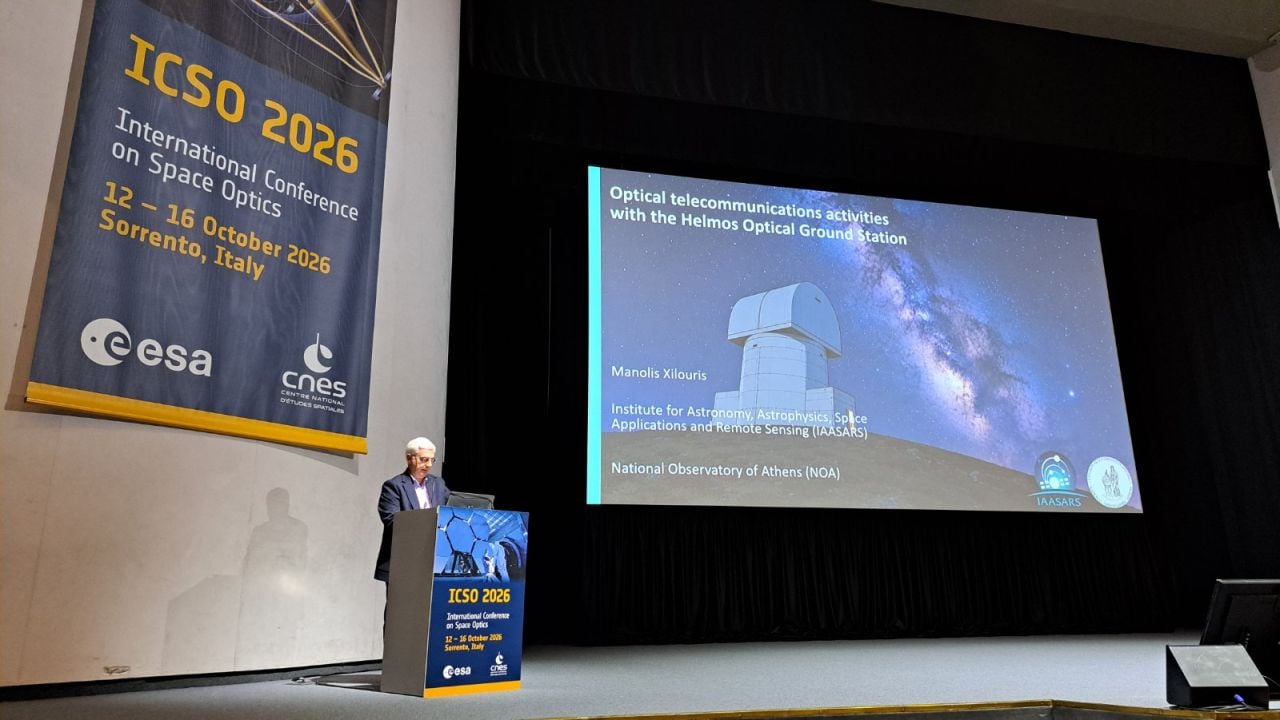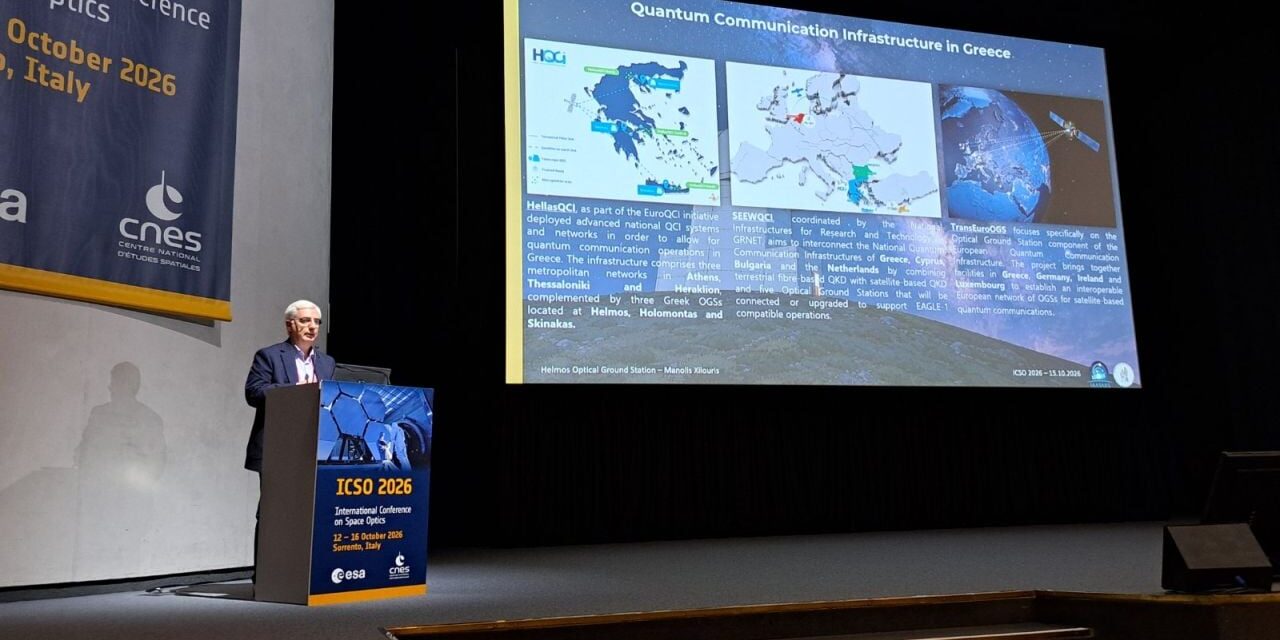
SEEWQCI and HellasQCI, both coordinated by GRNET, were highlighted at the International Conference on Space Optics (ICSO 2026), held on 12–16 October 2026 in Sorrento, Italy, through the participation of Manolis Xilouris, Director of the Institute for Astronomy, Astrophysics, Space Applications and Remote Sensing (IAASARS) of the National Observatory of Athens (NOA).
The conference brought together more than 700 participants from research centres, universities and industry worldwide to exchange knowledge, expertise and experiences in optical, optoelectronic and photonic technologies for space applications, fostering collaboration and innovation in advanced space communication systems.
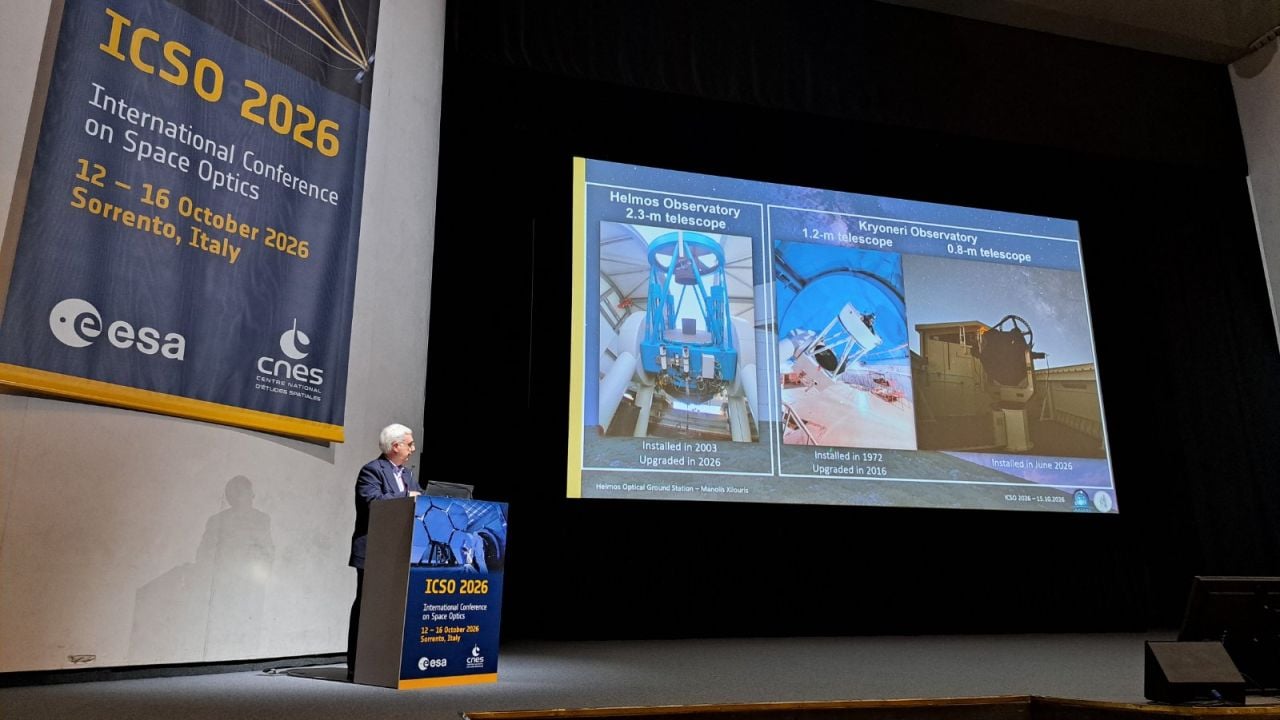
During his presentation, Manolis Xilouris highlighted the capabilities of the Helmos and Kryoneri Observatories in optical communications, showcasing the role of Greece’s research infrastructure in advancing technologies for space applications.
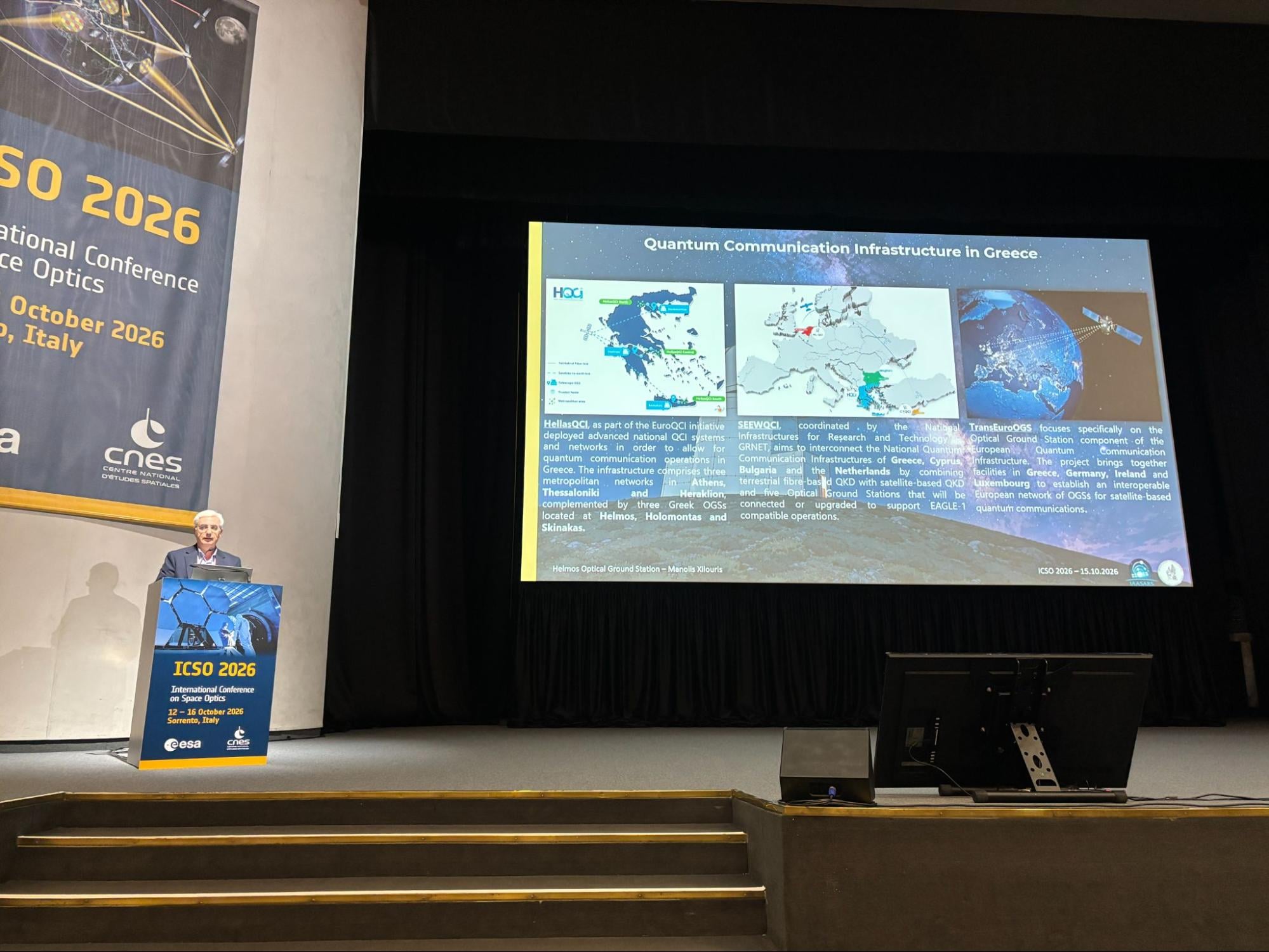
His presentation also addressed the contribution of HellasQCI, SEEWQCI and TransEuroOGS to the European Quantum Communication Infrastructure (EuroQCI) initiative, highlighting Greece’s progress from the development of national quantum communication infrastructure towards cross-border terrestrial and satellite-based quantum networks. Building on its participation in EuroQCI since 2019, Greece continues to leverage its geographical position and existing astronomical and optical communication infrastructure to contribute to both the terrestrial and space segments of the initiative.
Within this framework, the completed HellasQCI project established Greece’s National Quantum Communication Infrastructure through the deployment and validation of terrestrial Quantum Key Distribution (QKD) networks and supporting quantum-photonic technologies. The infrastructure comprises three metropolitan networks in Athens, Thessaloniki and Heraklion, complemented by connectivity to three observatories at Helmos, Holomontas and Skinakas, which were assessed as potential satellite-QKD Optical Ground Stations (OGSs).
Building on the national infrastructure and expertise developed through HellasQCI, SEEWQCI aims to establish cross-border quantum-secured connectivity between Greece, Cyprus, Bulgaria and the Netherlands, combining terrestrial fibre-based QKD with satellite-based quantum communications. The project foresees the connection or upgrade of five Optical Ground Stations to support EAGLE-1-compatible operations, contributing to the development and validation of interoperable terrestrial, satellite and hybrid QKD networks.
In this context, the Helmos Observatory will form part of SEEWQCI’s space-segment infrastructure, contributing to the validation of satellite-to-ground quantum communication capabilities. Its involvement builds on the activities carried out under HellasQCI, including orbital modelling, optical link-budget analysis and laboratory-based channel emulation.
Complementing these developments, TransEuroOGS focuses on establishing an interoperable European network of Optical Ground Stations for satellite-based quantum communications, bringing together facilities in Greece, Germany, Ireland and Luxembourg. The participation of Helmos Observatory in both SEEWQCI and TransEuroOGS supports the continuation of activities initiated under HellasQCI and strengthens its role within the emerging European space-based quantum communication infrastructure.
The participation at ICSO 2026 highlighted the contribution of Greece’s astronomical and optical communication infrastructures to the development of advanced space communication technologies. Together, HellasQCI, SEEWQCI and TransEuroOGS provide a pathway from national infrastructure deployment and experimental validation towards cross-border terrestrial connectivity and interoperable satellite-based quantum communications.